


Feeling low is part of being human. We all experience sadness after disappointment, loss, stress, or conflict. But sometimes people wonder: Is this normal sadness… or is it depression?
Understanding the difference can help you decide whether you need extra support.
What Is Sadness?
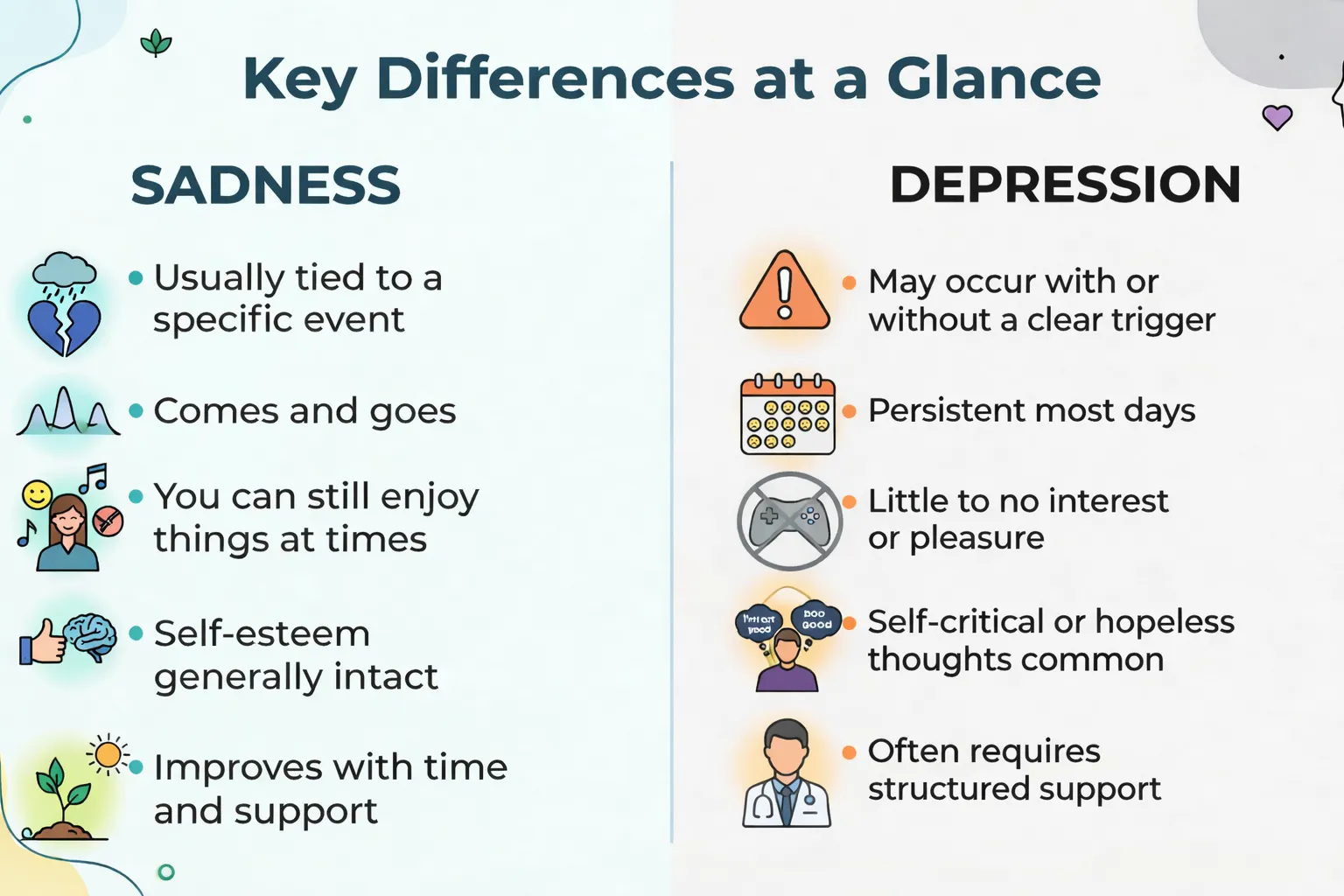
Sadness is a natural emotional response to something meaningful. It often:
- Has a clear trigger (e.g., breakup, job stress, loss)
- Comes in waves
- Eases with time
- Improves with connection, rest, or distraction
- Allows you to still experience moments of pleasure or relief
Even when sadness feels heavy, your sense of self-worth usually remains intact. You may think, “This is hard,” but not necessarily, “I am worthless.”
Sadness, though painful, is adaptive. It helps us process experiences and signals that something matters.
What Is Depression?
Depression is more than sadness. It affects mood, thinking, energy, motivation, and even the body.
Common signs of depression include:
- Persistent low mood most of the day, nearly every day
- Loss of interest or pleasure in activities you usually enjoy
- Significant fatigue or low energy
- Changes in sleep (too much or too little)
- Changes in appetite
- Difficulty concentrating
- Feelings of hopelessness, worthlessness, or excessive guilt
- Moving or speaking more slowly — or feeling restless
- Recurrent thoughts of death or not wanting to exist
A key difference is duration and pervasiveness. Clinical depression typically lasts at least two weeks and affects multiple areas of life — work, relationships, daily functioning.
It often feels less like “I’m sad about something” and more like “I feel empty, stuck, or numb.”
Questions to Ask Yourself
- Has this feeling lasted more than two weeks?
- Am I struggling to function in daily life?
- Have I lost interest in things that used to matter to me?
- Do I feel hopeless or unusually self-critical?
If you answered yes to several of these, it may be more than temporary sadness.
When to Seek Support
If low mood feels persistent, overwhelming, or is affecting your relationships or work, speaking with a mental health professional can help. Therapy provides space to explore what’s happening and offers evidence-based tools for managing depression.
If you are experiencing thoughts about harming yourself or not wanting to be alive, seek immediate support through local crisis services or emergency care.
A Compassionate Reminder
Not all pain is depression — but all emotional pain deserves attention.
Whether you’re moving through sadness or navigating depression, you don’t have to do it alone. Reaching out for support is not a sign that something is wrong with you — it’s a sign that you’re taking your wellbeing seriously.
If you’re unsure what you’re experiencing, we’re here to help you sort it out.